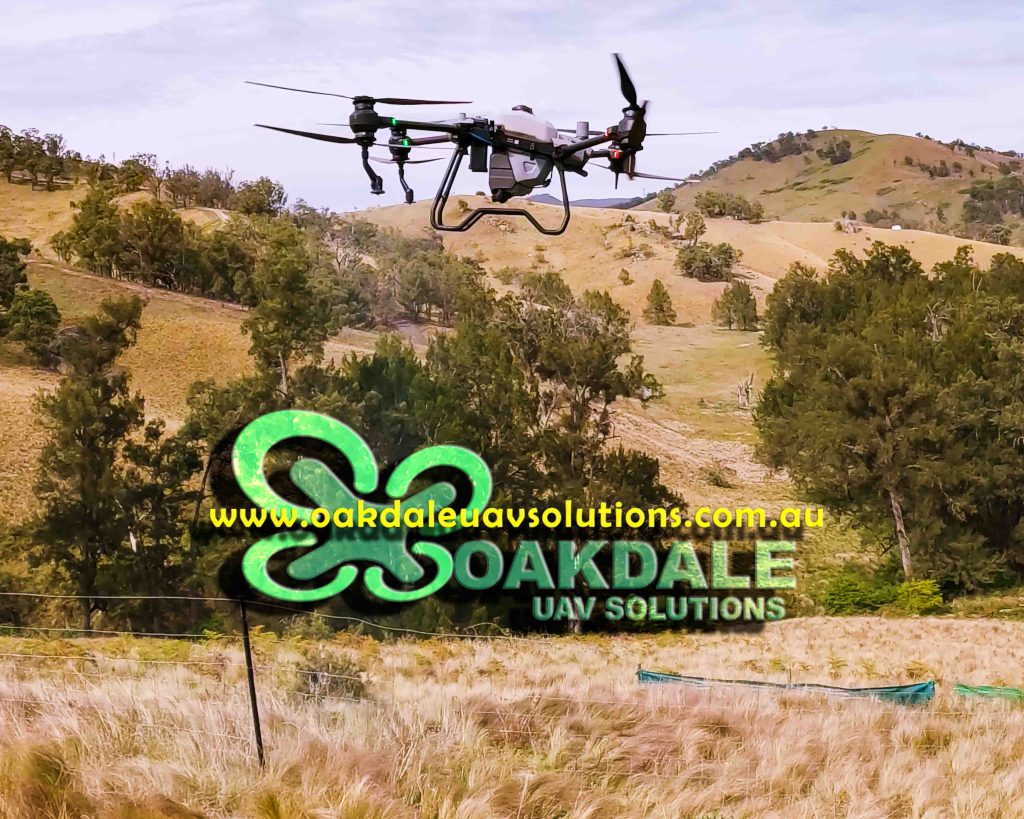
Serrated Tussock is healthiest between February and October, making it the best time for treatment. Outside this period, Tussock dries out and starts shedding hundreds of stems which are full of seeds! Treatment with a drone at this point is counter productive.
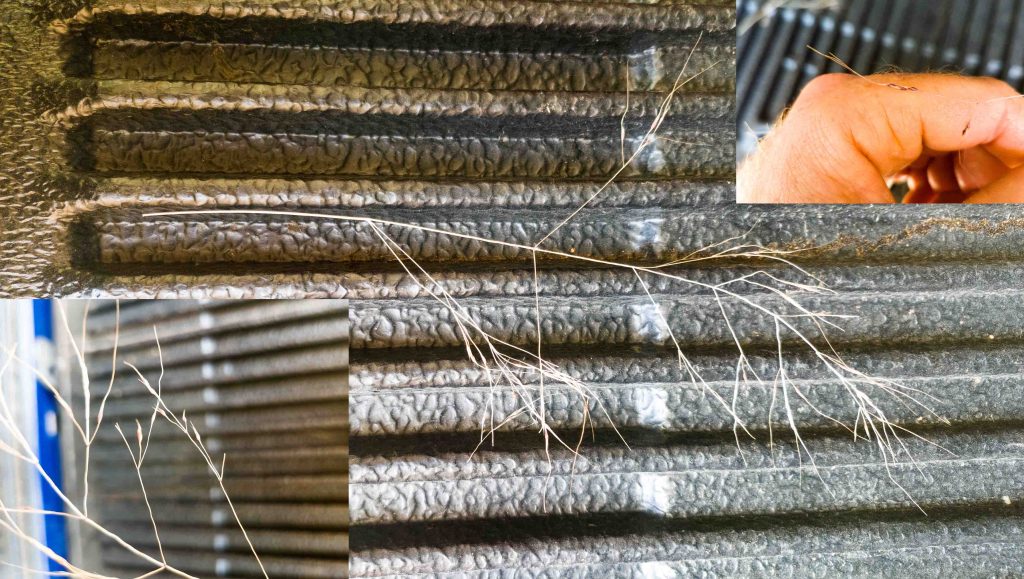
This is because downward force from Propwash stirs up and spreads loose stems, further dispersing seeds.
There are two options when treating by drone with a selective herbicide and each has its pros and cons but there is a superior product between the two.
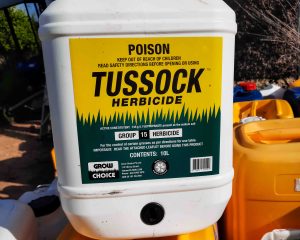
With liquid Flupropanate, the site usually needs mapping prior to treatment. This is because the drone flies much closer to the ground.
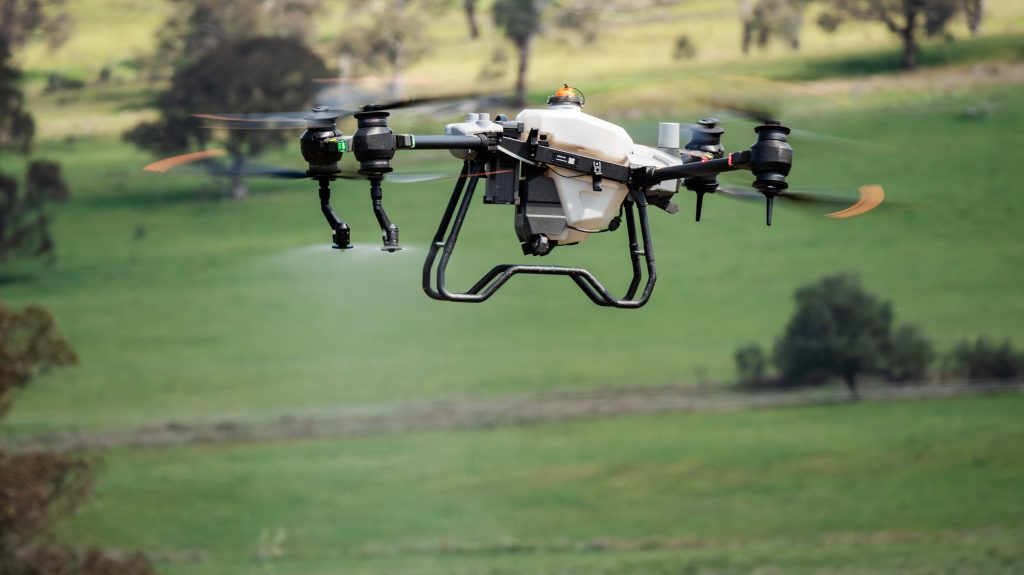
Obstacles (Mainly trees!) need to be accurately located for efficient obstacle avoidance and flight automation. Liquid Flupropanate is more suited to spot treatment and prescription weed map applications.
This is because the Drone’s spray system is more responsive to turning on and off when approaching weed clusters.
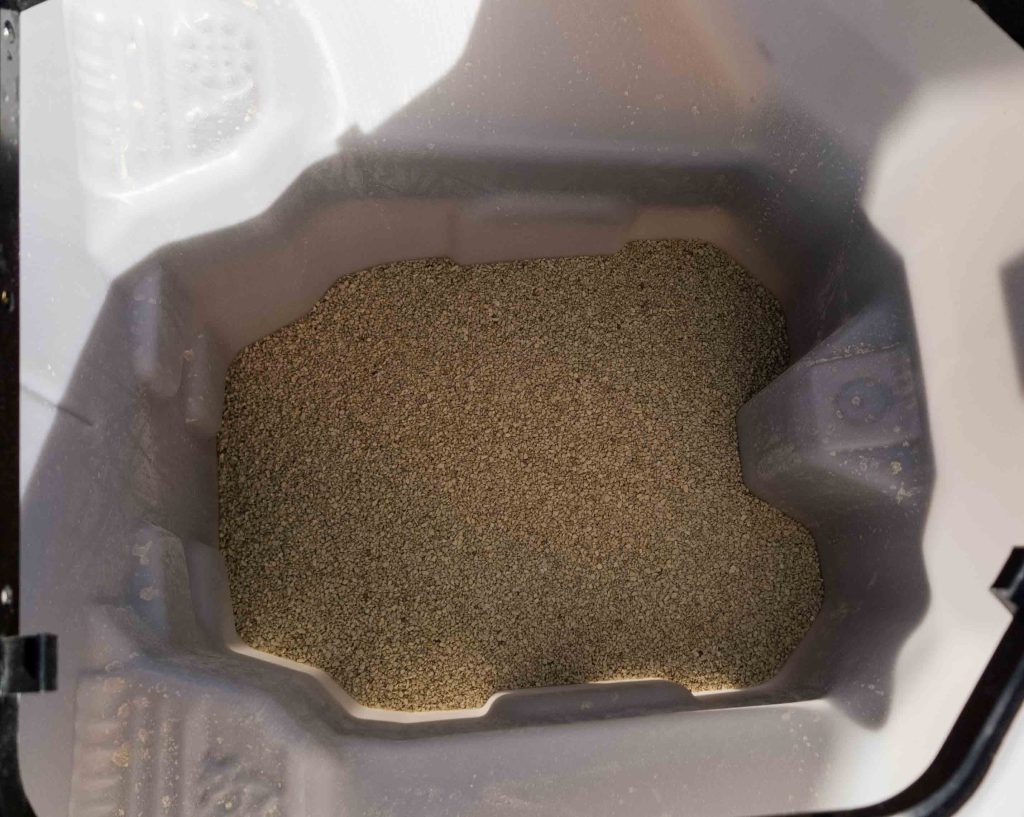
The Granule version is applied using a Spreader attachment, and is released above the treeline. This means mapping isn’t usually required as there are basically no obstacles.
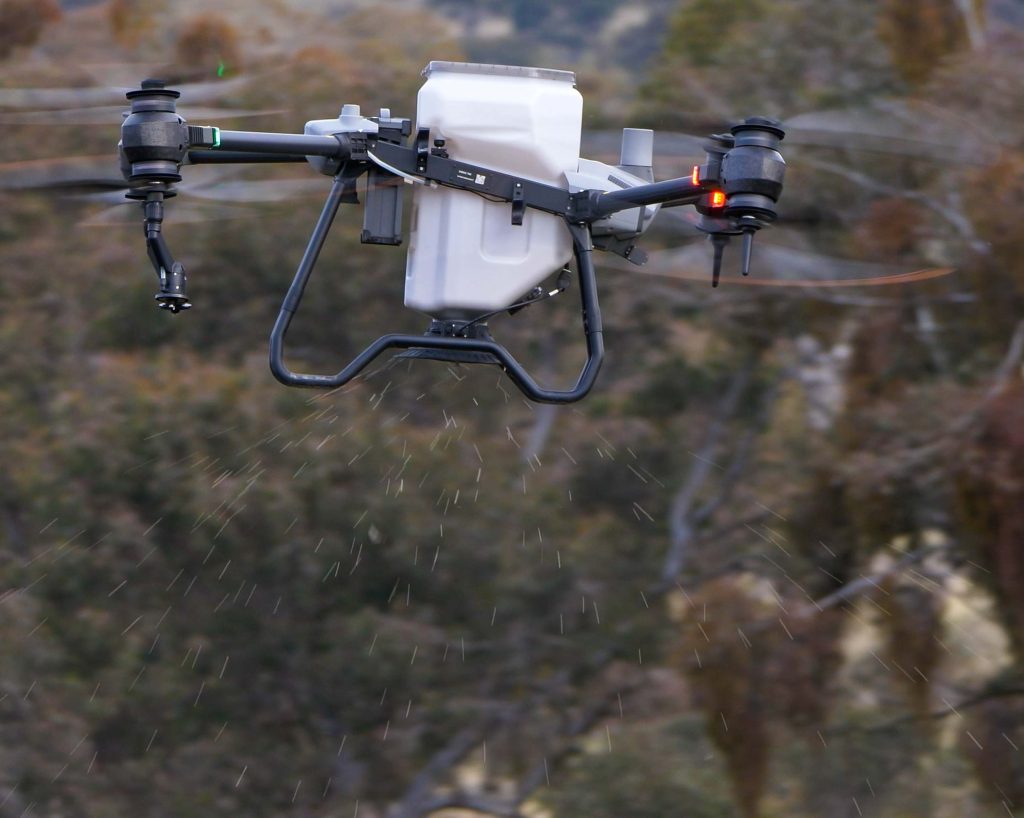
The Spreader’s mechanism works best during continuous application, this makes spreading better suited to Blanket applications.
A big advantage with granule is, filtering through trees and treating Tussock plants underneath.
However care must be taken on slopes up to a 30% grade in case of heavy rain, as granules can be washed away before they dissolve.
Both products have the same mode of action which is, by absorption in soil and uptaken through the Serrated Tussock’s root system.
Flupropanate resistant Serrated Tussock is starting to become an issue, and the residual stays in soil for up to three years. So there’s no reason to reapply until then.
It may not look like it’s working, but Serrated Tussock takes a while to thin out and die off.